Showing posts with label summer. Show all posts

Thursday, August 31, 2017

A Calendar for the Willamette Valley


January
February
March
April -- Maple Moon (when Bigleaf maples expand their leaves)
May
June
July
August -- Blackberry Moon (when blackberries ripen)
September
October
November
December

To be updated!!

Friday, July 21, 2017

New Genera v. ii

More new genera, this time from eastern Oregon.

Chaenactis (Asteraceae)
Layia (Asteraceae)
Blepharipappus (Asteraceae)
Ionactis (Asteraceae)
Tetradymia (Asteraceae)
Amsinckia (Boraginaceae)
Alyssum (Brassicaceae)
Descurainia (Brassicaceae)
Lepidium (Brassicaceae)
Phoenicaulis (Brassicaceae)
Sisymbrium (Brassicaceae)
Holosteum (Caryophyllaceae)
Grayia (Chenopodiaceae)
Lathyrus (Fabaceae)
Camissonia (Onagraceae)
Gayophytum (Onagraceae)
Eriastrum (Polemoniaceae)
Navarretia (Polemoniaceae)
Ceratocephala (Ranunculaceae)
Myosurus (Ranunculaceae)
Plectritis (Valerianaceae)

Saturday, July 12, 2014

season rolls on

In the forest, Oemleria is letting go of her leaves. Fast to get started on spring, quick to begin fall...
oemleria yellow leaves from below
oemleria fall leaves sunbeam

While thimbleberry still has scars from a spring hailstorm.
 thimbleberry leaf holes
In the garden, pumpkins have long outgrown their hole-punched leaves, zucchinis hide and grow to surprising size + first ripe tomato!

Tuesday, July 8, 2014

heat of the day

First ripe blackberries, on Barbur! Oh yeah, dark expanse of heat absorbing and reradiating pavement.

Meanwhile, the sky:

mackerel sky

whispy clouds

evening sky with rays and moon

Sunday, June 15, 2014

Petal Sepal Confusion

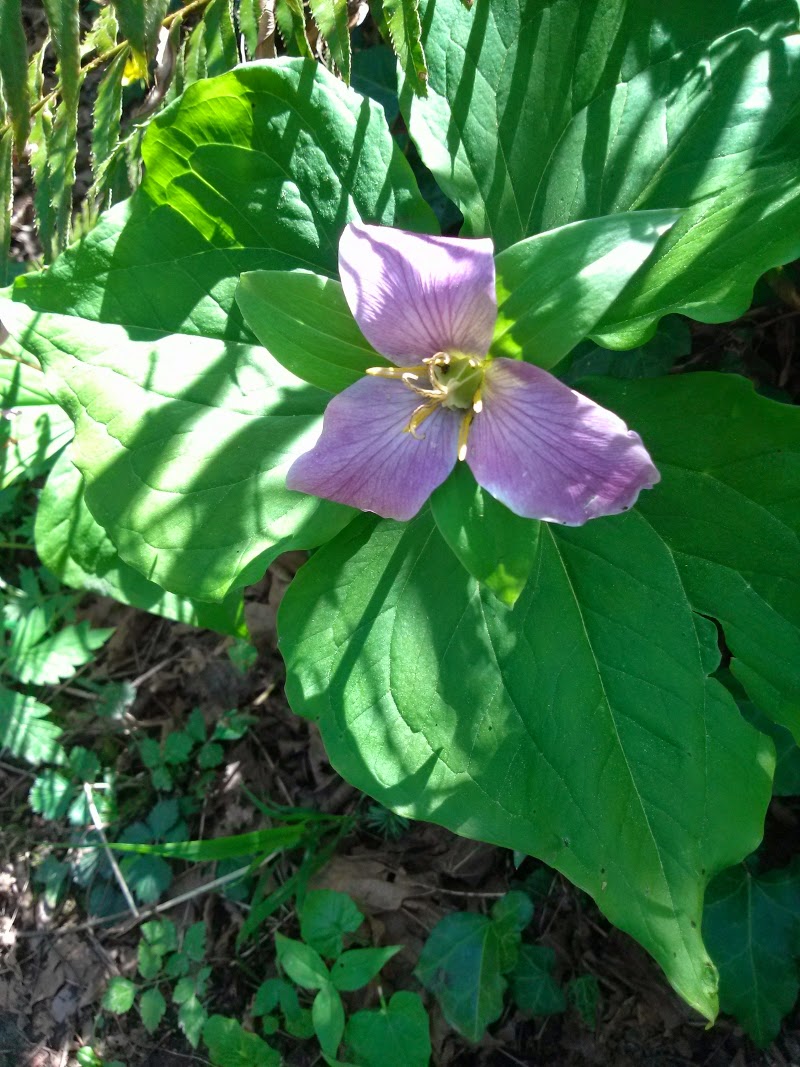
How do plants keep petals and sepals separate? I found a trillium (Trillium ovatum) that doesn't.

This is a trillium, its three originally white petals fading pink in late spring. The petals rest on three pointed green sepals. Below the flower are three large photosynthetic organs, which I just learned are technically not leaves, but bracts!

trillium forest flower

And this is a trillium that looks to have merged its petals and sepals into one structure. Huh.
odd trillium forest flower

Friday, June 6, 2014

summertime begins

First thimbleberries (Rubus parviflorus) and osoberries (Oemleria cerasiformis) found ripe and eaten today + garden soil thirstily sucking down water = it's summer! 夏天!

Sunday, February 2, 2014

Edible Invasives

Riding out highway 224 along the Clackamas River is one of the best ways to experience NW Oregon in late summer. I travelled this corridor in 2012 en route to forest camping.

blackberry bike clackamas river

Free refreshments were all along the road. I stopped often to pick sweet, sun-ripened blackberries.


A year later I travelled the route again, but vines that had supported fruit the year before were now just dead white bare branches, incapable of producing special regenerative berries.

bike clackamas river basalt

Saturday, February 1, 2014

Beans of the Summer

Scarlet runner beans are a peak summer vegetable with flashy red flowers and large, prolific pods. Immature pods are like a meaty green bean and the mature seeds can be used as a dry bean.

When immature, the beans are hot pink. Later on they develop dark speckles...

hot pink speckled bean


dry speckled bean
As they mature the pink darkens to purple, and even continues to deepen as the seeds age off the plant.

Last summer a trellis full of runner beans -- including scarlet and less colorful types -- fell over in my garden. I'd meant to save them for seed, but they weren't very dry when they fell. I shelled them and put them on a dehydrator.

 The treatment was too harsh, judging by the cracked seed coats.

Figuring the beans wouldn't store well and might not sprout at all, I rehydrated them in preparation for cooking.


But lots of them did sprout - go beans!


 Then I cooked and ate them.

Monday, December 9, 2013

Tepee Attempt

Tried to build a tepee this summer. The quest to recreate the simple, mobile, and graceful shelter of the Plains tribes is a recurring theme for me, and while this iteration didn't get lived in, at least it's an adventure worth sharing.
fun friends hauling bamboo by bike
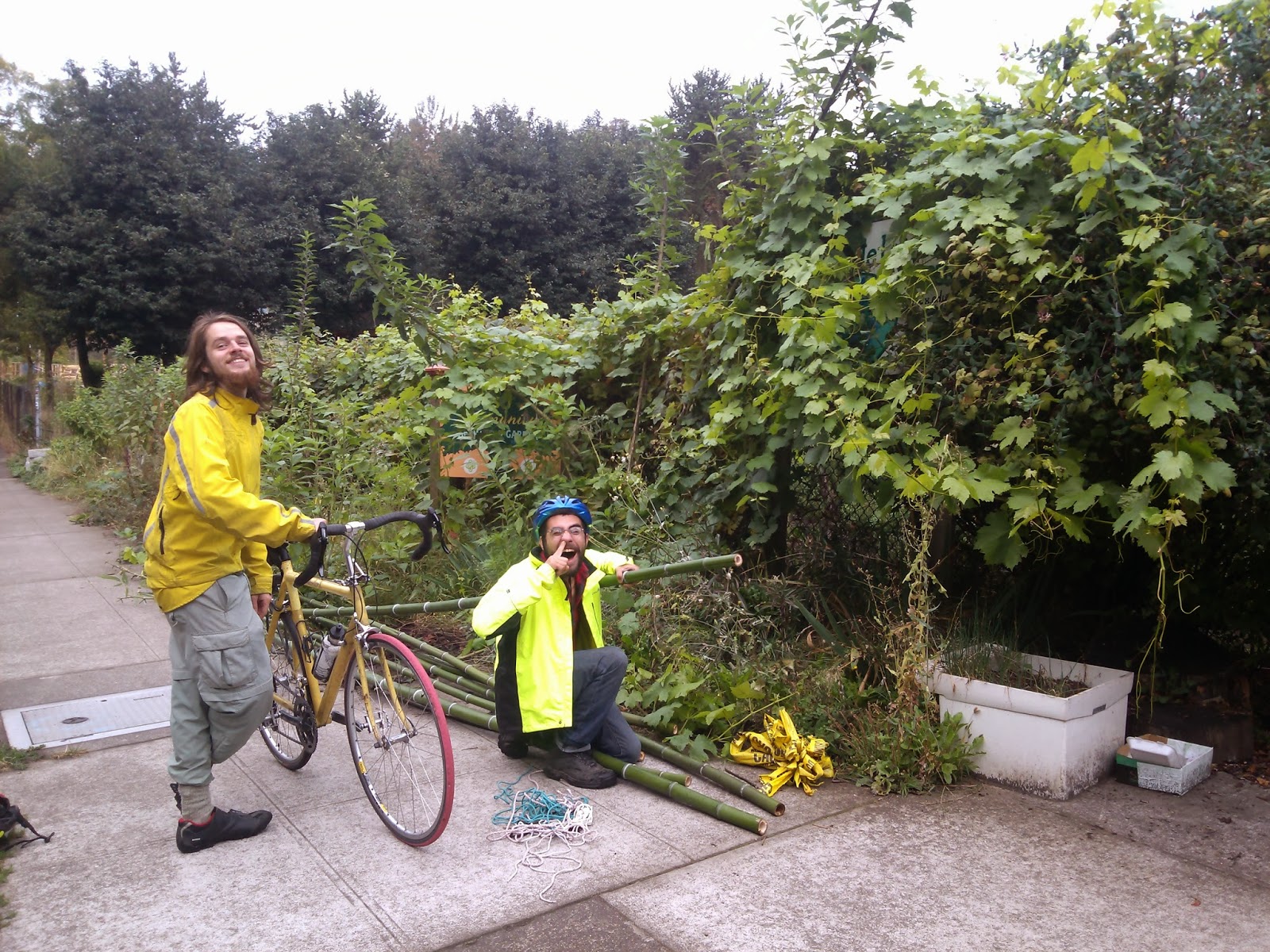
To begin, I had the help of two friends. Excellent bike handling skills and a sense of humor were required for the task ahead.

 We secured four giant bamboo poles on each of two bikes and set off to ride 5 miles through the city to the north.

haul bamboo by bike


 Motorized traffic was light on that Sunday morning, but there was still enough foot traffic to provide an audience. One man expressed the notion that bamboo carried by bike is more 'sustainable' than anything else in existence. This may be true.


bamboo tepee
Arranged into formation, the bamboo took on that beautiful form of a giant cone!


bamboo tepeebamboo tepee
View from below.


bamboo tepee slug trail
Blue plastic provided a covering and a canvas for slug meanderings.

bamboo tepee
And it stood, reflecting the color of the sky.

Monday, October 25, 2010

Why the Trees Sparkle


In 2006, working in a dry area of Idaho (above), I remember noticing flashes of light near the tops of the pines. I couldn't imagine why the trees were sparkling, but I didn't think it was my imagination because I kept noticing it. This summer at the Newberry National Volcanic Monument on the dry side of Oregon I came across this tree growing in an obsidian flow:

lone pine tree obsidian flow


And noticed that the tree had this cone:

sparkling pine cone sap
Notice the bubbles of sap stuck to the cone
sparkling pine coneI'm convinced this is why those trees were sparkling. Now I wonder why the cones are oozing sap, and whether it is a particular kind of pine tree that does this. How many needles are in a bunch is diagnostic of species for pine trees, and from my picture it seems the needles are in bunches of five (Trees to Know in Oregon tells me Oregon native pines with 5 needles to a bunch are: western white, sugar, limber, and whitebark).